What is Effort_less?
EFFORT_LESS is a "project starter" that you use to begin every new website you create. It includes a set of CSS rules and a variable system that speeds up and simplifies building websites in Webflow. It was created as an alternative to popular frameworks like Client-First and Lumos, combining their best solutions while simplifying many aspects and introducing new features.
Who is it for?
If you're building websites in Webflow but are looking for a more flexible and intuitive approach to organizing styles — EFFORT_LESS is for you.
To fully take advantage of its capabilities, it's helpful to know:
- CSS Variables
- Semantic HTML
- Responsive design (RWD)
- Context of page containers
If any of these terms are unfamiliar to you — don't worry! You'll find brief explanations of each topic in the documentation.
Main Features
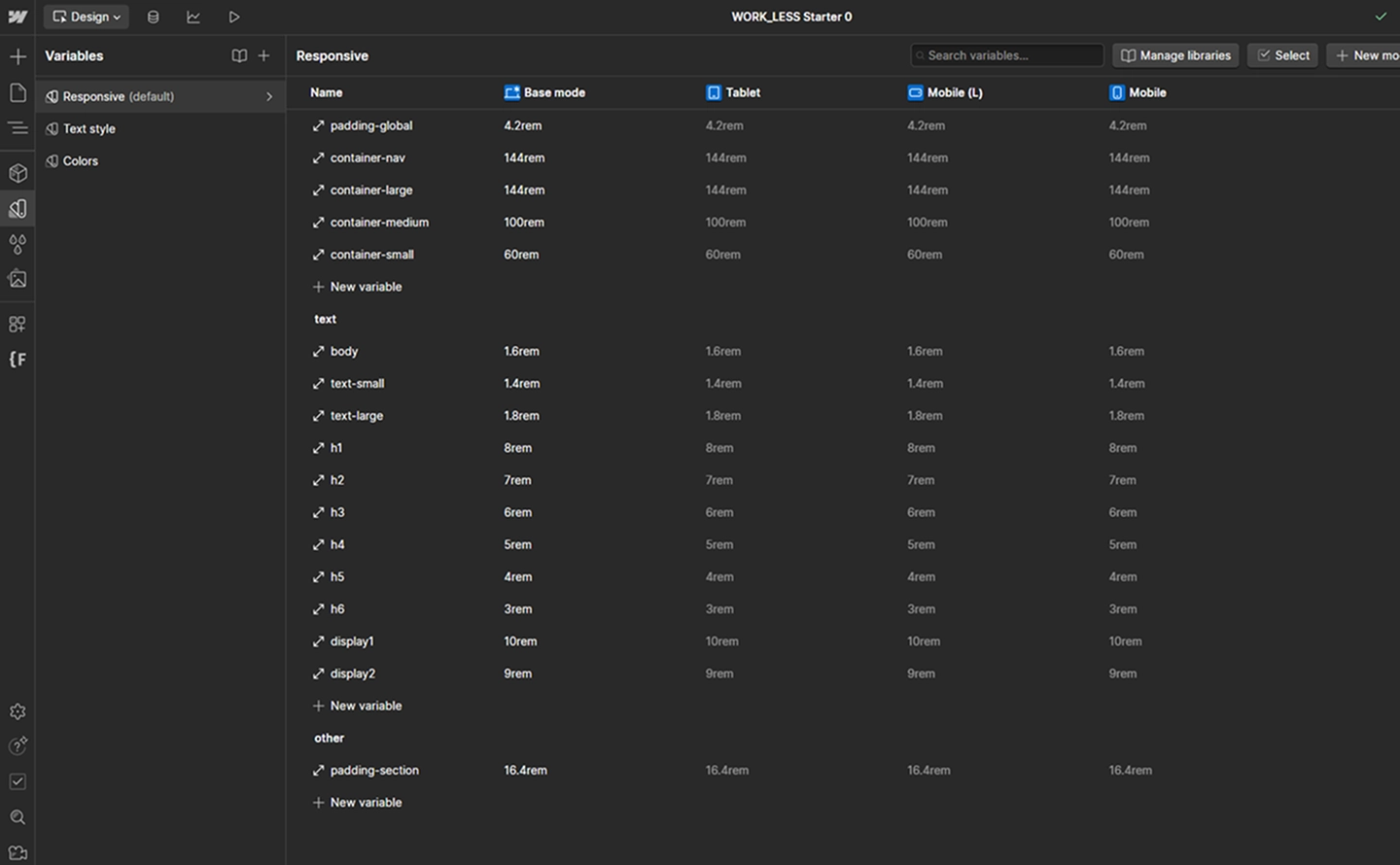
New rem settings
The way the REM unit is used has changed — now 1rem = 10px. Any value based on pixels is written in decimal form, for example: 16px = 1.6rem
Auto containers
A new auto container system has been added, which creates the appropriate styles for semantic tags and their first elements / first-child.
Variable Modes
EFFORT_LESS fully utilizes Variables and the new Variable Modes feature, introduced to Webflow in early 2025. This allows you to manage colors, spacing, and typography even better within your project.
Sticky section
Improvements have been made to the handling of position: sticky for section content, allowing for more stable and predictable pinning of elements while scrolling.

Before you begin
Understanding EFFORT_LESS and adopting new principles might take some time, so be patient, experiment, and try to recreate the newly learned concepts. The documentation has been written in a way that allows for chronological learning. However, some topics are interrelated, so sometimes you need to jump to another section to better understand the context. If necessary, look for information in other parts of the web, for example, regarding Variable Modes or HTML semantic tags.
The documentation is still being worked on to make it as accessible as possible. If you'd like to support my work and help it reach the rest of the community, please like my post on Instagram — I'll also keep you updated on the progress there.
